

The intent generates the many. But there is always the One - the calculation, the integration, the rule no model can express - and that is where you jack in and write Java yourself.
Model-driven platforms live or die by their escape hatch. Ninety percent of an application is CRUD, forms, dropdowns and workflows that you should never hand-write - and the Eclipse Dirigible intent layer generates exactly that. But every real system has the other ten percent: a calculation, an integration, a rule that no model can express. The question is whether the platform lets you write it cleanly, or forces you to fight it.
In this article we take the generated sales-invoices module from the multi-module sample - the billing suite composed in the previous post - and replace one piece of logic - the invoice number generation - with hand-written Java, using the full IDE tooling, without leaving the browser.
The boundary: model vs. code
The intent owns three folders, each with a clear owner:
| Folder | Owned by | Lifecycle |
|---|---|---|
the *.intent | you | the only authored model artefact |
gen/ | the platform | wiped and regenerated on every Generate |
custom/ | you | the escape hatch - touched by nobody |
Anything you hand-write goes in custom/. It survives regeneration. The model declares a hook; your code supplies the implementation.
The hook: a calculated-field action
Line totals (Net = Quantity * Price) are neutral arithmetic - a one-line calculated expression in the intent, evaluated on the server and previewed live. But the invoice number is different: in a real deployment it comes from a number-series service with prefixes and sequences. That is logic, not arithmetic.
The intent declares the field as a calculated action and imports the class that will implement it:
- name: SalesInvoice
  imports: |
    import custom.sales_invoices.SalesInvoiceNumberAction;
  fields:
    - { name: number, type: string, length: 100, calculatedActionOnCreate: SalesInvoiceNumberAction }
calculatedActionOnCreate names a Java class; the generated repository will call Beans.get(SalesInvoiceNumberAction.class).calculate(entity) whenever an invoice is created. The model says what runs; you write how.
The implementation
Under custom/, write the class:
package custom.sales_invoices;

import java.util.UUID;

import org.eclipse.dirigible.sdk.component.Component;
import org.eclipse.dirigible.sdk.db.CalculatedField;

@Component
public class SalesInvoiceNumberAction implements CalculatedField<Object, String> {

    @Override
    public String calculate(Object entity) {
        return UUID.randomUUID().toString();
    }
}
@Component makes it a managed bean; CalculatedField<E, T> is the one-method contract the repository invokes. Here it returns a UUID so the sample runs without an external service - swap in a real number-series call and nothing in the model changes.
The tooling: IntelliJ-grade Java in the browser
This is where the Dirigible web IDE earns its keep. Editing that class, you get full JDT language-server support directly in the browser:
- completion, hover and signature help over the platform SDK
- go to definition and peek references across your code and the SDK
- rename and other refactorings
- live diagnostics as you type
- breakpoints and step-debugging through the Java debugger
Client Java is compiled in-process - one javac task per synchronization cycle, sharing the JVM with the platform - so Beans.get(...) resolves real platform beans and your class is live at the next request.
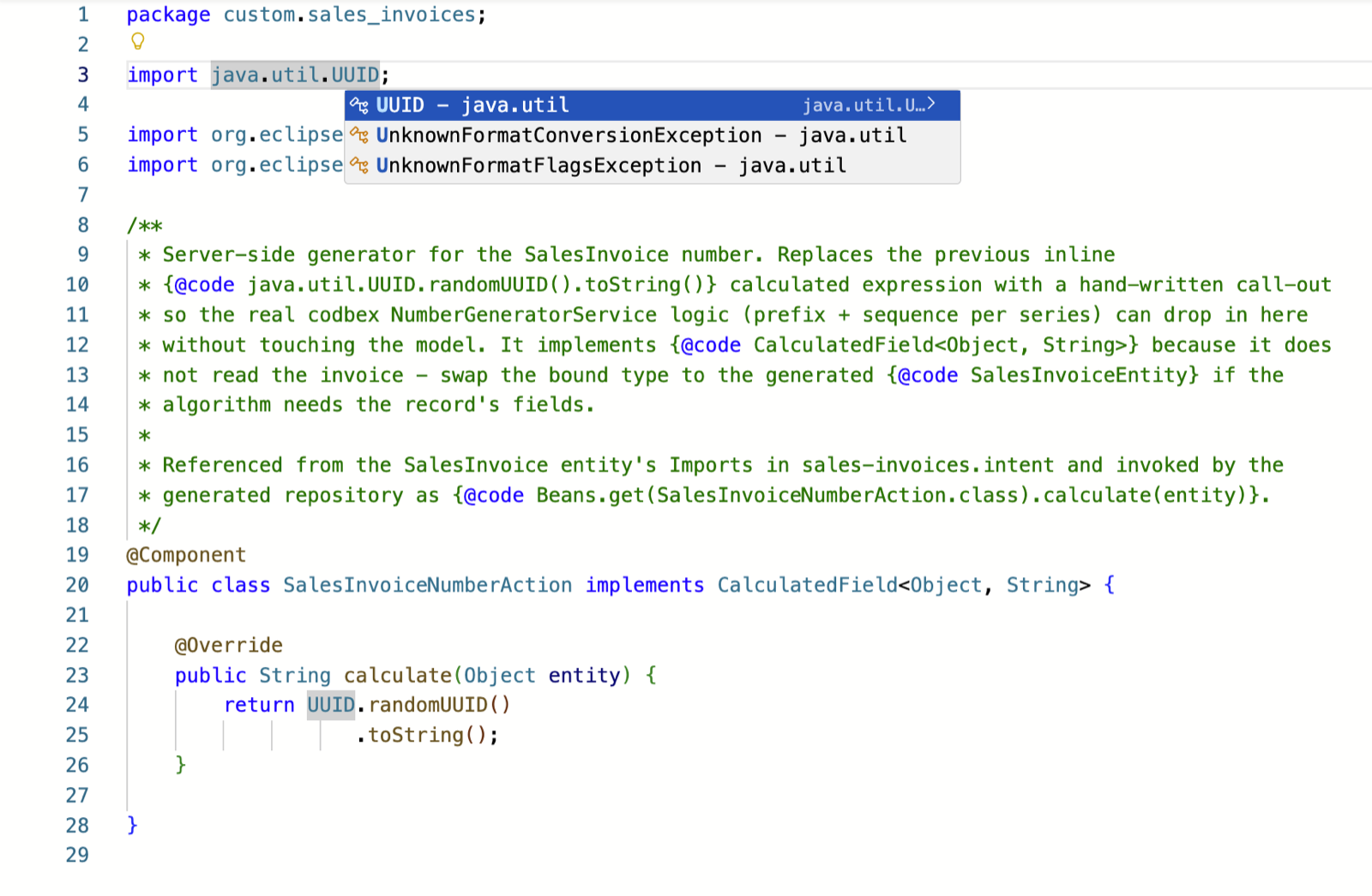
Editing the calculated-field action in the browser: real JDT completion, over the JDK and the org.eclipse.dirigible.sdk.* imports alike.
A reusable escape hatch: a workflow delegate
A calculated field is one hook; a BPM delegate service task is another. In the finished sample the invoice's definitive number (SI00000001) is stamped after the Issue step, not on create. The process declares a delegate step:
- name: generateNumber
  kind: serviceTask
  args:
    delegate: custom.sales_invoices.DocumentNumberGeneratorDelegate
    fields: { type: "Sales Invoice" }
    next: allocatePayments
delegate binds the step to a hand-written JavaDelegate in custom/. That delegate loads and saves the invoice through its generated repository (keeping validations, events and i18n) and defers the actual prefix + zero-padded formatting to a separate, entity-agnostic generator that lives in its own module, the numbers module (of the same repo):
// custom/sales_invoices/DocumentNumberGeneratorDelegate.java  (in the invoices module)
public class DocumentNumberGeneratorDelegate implements JavaDelegate {
    public FixedValue type;                                     // injected from the step's `fields`
    private final SalesInvoiceRepository repository = new SalesInvoiceRepository();

    @Override public void execute(DelegateExecution execution) {
        SalesInvoiceEntity invoice = repository.findById(((Number) execution.getVariable("Id")).intValue());
        invoice.Number = new DocumentNumberGenerator().generateByType(type.getExpressionText());
        repository.updateWithoutEvent(invoice);                 // system write: no "-updated" event
    }
}
The split is deliberate: the number-formatting logic (DocumentNumberGenerator) is entity-agnostic, so it lives once in the numbers module and is reused by every document module; the delegate that touches the invoice belongs in the invoice module, because it must go through that entity's generated repository. Custom code, written once, reused across the whole suite - and still never touched by regeneration.
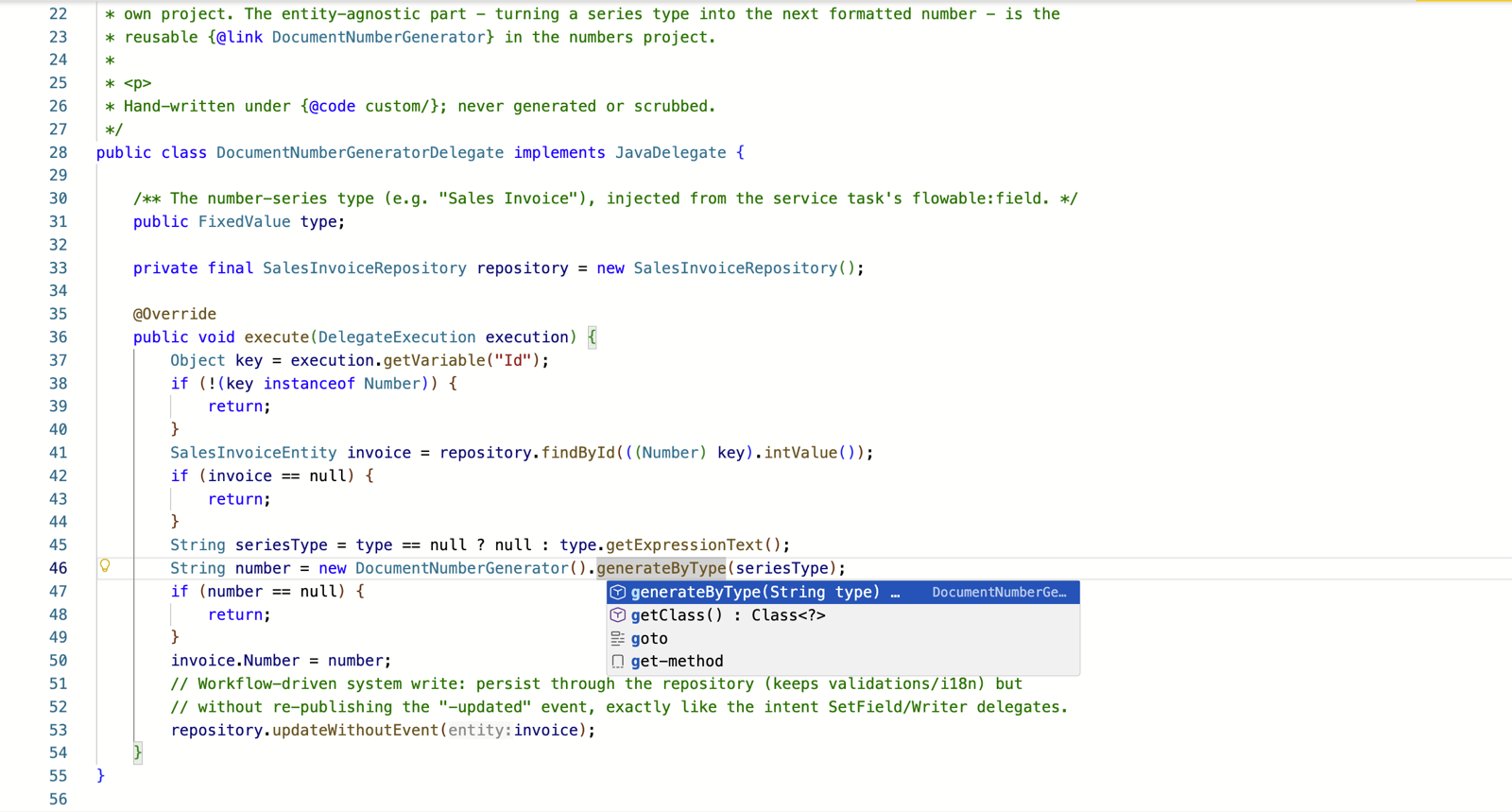
The delegate, completing DocumentNumberGenerator.generateByType(...) from the numbers module - the cross-project import resolved by the language server, in the browser.
Three things that will save you an hour
Because client Java compiles as one in-process batch, a few rules matter in practice:
- Always use a named package. A class in the default package cannot be imported or referenced from the generated repository - so the calculated action above declares
package custom.sales_invoices;. The entity'simports:must import it by that fully-qualified name (or you give the action's fully-qualified class name directly). - One bad file fails the whole batch. All client
.javaacross all projects compile together each cycle. A single file that does not compile takes down every project's Java endpoints with a 404 - not just the broken one. If Java routes vanish wholesale, look for one uncompilable source. - Delete offers to unpublish. A published
.javalives in the registry, compiled and served independently of your workspace copy - so deleting the file on its own would leave the served class behind. That is why the IDE always asks whether to unpublish when you delete a file: unpublishing removes it from the registry. Accept and the served copy is gone; decline and it lingers until you unpublish (or re-publish).
The point
You did not fork the framework, override a generated file, or drop out of the platform. You declared a hook in the model and wrote one small class in custom/, with the same editing experience you would get in a desktop IDE. Regenerate the app as often as you like - your code stays put.
That is the balance Dirigible strikes: low-code where you can, real code where you must - in one environment, in the browser. Clone sample-intent-multi-model and try swapping the implementation yourself.